Skip to content
Property since 1988 · Hofheim am Taunus
International Immobilien Hofheim
Costa Blanca · Mallorca · Costa del Sol

Property where other people holiday

Spain is Europe's number one holiday destination — and that is exactly what has carried its property market for decades. We have been guiding buyers to the Spanish coast since 1995, from the first viewing trip to the handover, with the same contact you deal with in Hofheim.

Secure

  • We walk you through every official step, from the NIE number to the land registry entry.
  • Charges, planning permission and habitation certificate checked before you pay a deposit.
  • One contact in Hofheim who speaks the language on both sides.

Durable

  • Coastal locations with limited land and lasting demand.
  • Strict building rules keep development in check along much of the coast.
  • Lettable in season, yours to use on your own holiday.

Growing

  • More than 320 days of sunshine a year — the season does not end in September.
  • Reachable all year through Alicante, Palma and Málaga.
  • European demand from Germany, England and Scandinavia.
Why the coast never goes cold

Three numbers that explain the market

320 days of sunshine a year on the southern Costa Blanca
200 km of Costa Blanca coastline, almost all of it Blue Flag
18 °C water temperature in the Mar Menor even in winter

That is what separates this from a seasonal holiday region. Where January brings 16 degrees, letting does not stop in September and neither does living there. A growing share of buyers now stays all year.

What carries the market

Four reasons that reinforce each other

Europe's first choice

Spain receives more international visitors year after year than almost any other country in Europe. Some of them return — and some of those buy.

A finite coast

The desirable locations are limited, and strict building rules keep them that way. What may be built on the Costa del Sol or Mallorca is regulated, which protects existing values.

Usable all year

Mild winters turn a holiday home into a second residence. Sixteen degrees in February is not something you visit only in August.

First-class healthcare

Hospitals, specialists and German-speaking private doctors are available on all three coasts. For many buyers over sixty, that is the point at which the decision is made.

In short

The climate of southern Spain counts among the healthiest in Europe — for rheumatic and joint complaints as much as for cardiovascular and asthmatic conditions, and for skin conditions too. For many of our buyers the property is therefore not only an investment but a decision about the next twenty years.

Without us

On your own it gets complicated

  • NIE number, Spanish bank account, land registry extract — every step in a language you would rather not negotiate in.
  • The preliminary contract binds you before any notary has looked at the property.
  • Charges, unpaid community fees and missing habitation certificates pass to you on purchase.
  • What you see on a portal has often long since sold — or was never available.
Mit uns

Or you let us lead

We take you through the official requirements — from the first viewing to the handover. That includes checking what you are buying along with the property: charges on the register, outstanding community fees, planning permission and the habitation certificate.

A Spanish purchase runs in two stages: first the private preliminary contract (contrato de arras) with a deposit of usually ten per cent, then the notarised deed (escritura). If the buyer walks away the deposit is forfeit; if the seller walks away they owe double. Which is precisely why the checks happen before the preliminary contract, not after it.

Your contact sits in Hofheim and stays there after the handover.

The regions

Three coasts, three characters

01

Costa Blanca

With the Costa Cálida and the Mar Menor

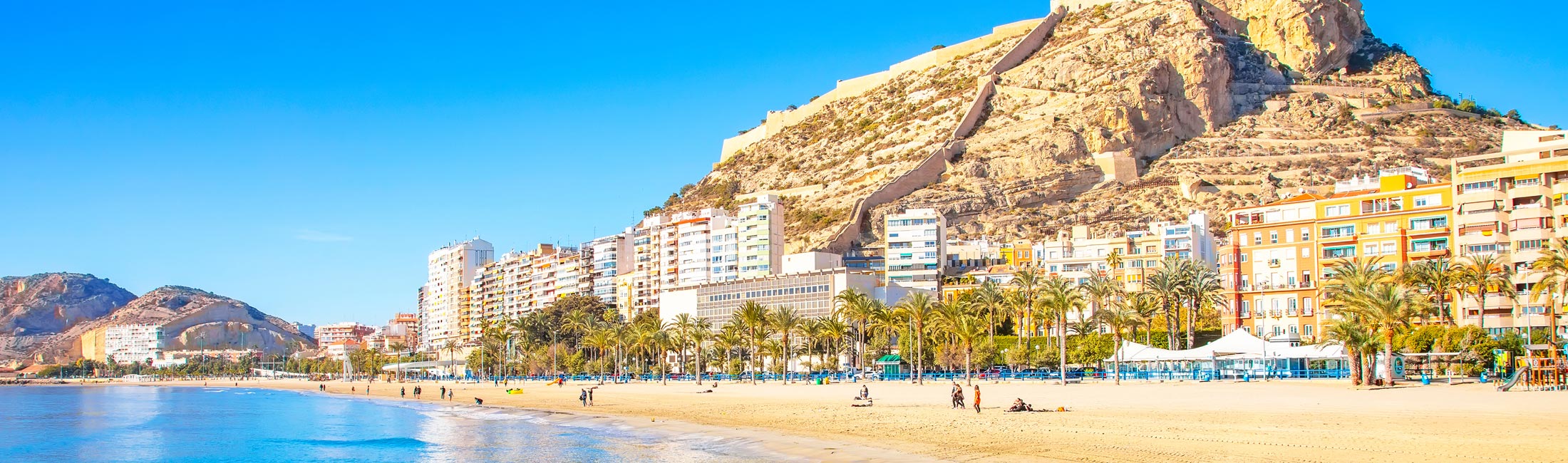
More than 200 kilometres of coastline, with the Blue Flag flying on almost every beach. North of Alicante, steep cliffs, green landscape and small bathing coves; to the south, fine sandy beaches with dunes and pine woods behind them. The stretch between Santa Pola and Guardamar del Segura runs for 17 kilometres and is among the quietest on the coast.

The original character has largely survived: citrus groves, terraced vineyards and the great salt gardens of the Salinas. Towards the Mar Menor the cliffs return, with sandy beaches between them. The Mar Menor rarely drops below 18 degrees, even in winter.

Almost every town holds a weekly market. For families relocating permanently: several international private schools now teach a multilingual curriculum.

Climate and health

More than 320 days of sunshine and a dry-summer Mediterranean climate: eight months of warm to hot summer, milder winters with little rain. The constant breeze is welcome in summer.

The climate of the southern Costa Blanca is considered one of the healthiest in Europe — particularly for rheumatic and joint complaints and for cardiovascular and asthmatic conditions. For skin conditions such as shingles and psoriasis, bathing in the lagoons and in the Mar Menor has produced good results.

Care is first class: hospitals, specialists across every field, a well-organised emergency service and, in many places, German-speaking private doctors.

Sport and leisure

Golf all year — Las Colinas de Campoamor, Villamartín, La Finca, Las Ramblas, Alenda and La Marquesa among others. Tennis on hard, clay and artificial grass in La Marina, Jávea and Moraira.

Marinas line the coast between Denia and the bay of Mazarrón; the sailing grounds run from Santa Pola across the Mar Menor to Cartagena, with Formentera some 60 nautical miles out. Plus surfing, waterskiing, snorkelling, diving and deep-sea fishing.

For a change of pace: Terra Mítica, Mundomar, Terra Natura and Aqualandia in Benidorm, the Aquopolis water park in Torrevieja, safari parks at Elche and Vergel.
02

Mallorca

The largest of the Balearics

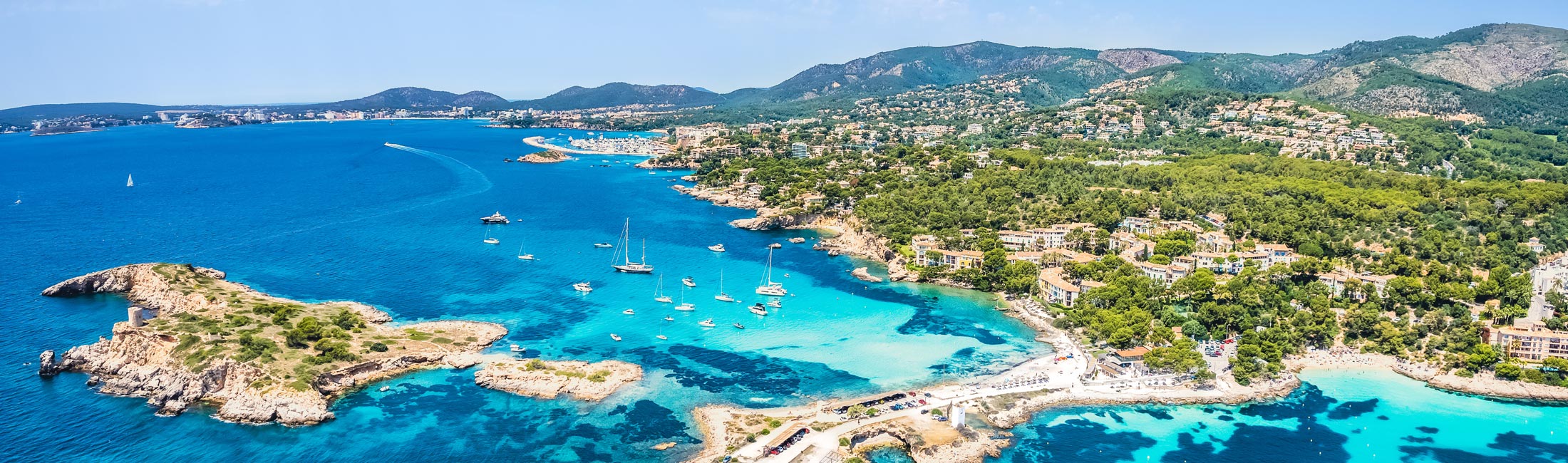
More than 500 kilometres of coastline and 179 beaches. Son Sant Joan airport is served several times a day from almost every European airport; the island is also reachable by ferry from Dénia, Valencia, Tarragona and Barcelona — with your own car on board.

Few regions in Europe hold so many contrasts in so small a space: cultural travel and country life, mountain walking and beach life. The official languages are Spanish and Catalan; the island dialect is called Mallorquí. For families moving over: six international schools teach a multilingual curriculum.

Climate and health

Temperate subtropical, averaging eight hours of sun a day. The southern half of the island is very mild and dry; in the northern mountains showers are possible and, at altitude, occasional snow.

May to October suit a beach holiday. High summer brings almost no rain and temperatures that can touch 40 degrees — cyclists and active travellers are better off avoiding July and August.

Medical care matches the mainland: hospitals, specialists, dentists and pharmacies, plus German-speaking private doctors in several towns.

Sport and leisure

Fifteen golf courses open all year, with more planned; many hotels have arrangements with nearby courses, so the question at reception is worth asking.

Tennis at competition level, including the international school under Pavel Slozil. Sailing, diving, snorkelling, waterskiing, jet skiing and fishing in wide choice.

Inland: walking on old paths, riding schools offering day rides and lessons, free climbing and paragliding. Palma de Mallorca deserves a day of its own — sights, architecture and a markedly international feel.

03

Costa del Sol

Andalusia, from Málaga to Marbella

Infrastructure at central European standard: good roads, modern telecommunications, international schools (German ones among them), a rich choice of restaurants and shops, international banking services and excellent medical care. Add first-class golf courses and marinas such as Puerto Banús. Málaga airport puts the coast within direct reach from across Europe.
The region is subject to strict building rules. The architecture remains committed to the Andalusian style, and it has largely been spared tower blocks and holiday megastructures — at consistently good to very good build quality. As the successor to the Côte d'Azur, the Costa del Sol enjoys an excellent international reputation and counts among the safest places to invest in Spain. Prices sit accordingly, as on Mallorca, in the upper segment.

It is also the gateway to an exceptionally rich Andalusia: the Alhambra in Granada, the Mezquita in Córdoba, the Giralda in Seville.

Climate and health

Alongside the southern Costa Blanca, one of the mildest regions on the Mediterranean coast. The Sierra Blanca ridge shelters much of the coast from cold continental air in winter and excessive heat in summer.

The January mean is 16 degrees, the August mean 29 — with more than 320 days of sunshine a year. That makes the Costa del Sol suitable as both a holiday and a permanent home, all year round.

Sport and leisure

Numerous first-class golf courses and marinas, Puerto Banús above all, together with the full range of water sports along the coast.

For anyone drawn to culture this is the best-placed of the Spanish coasts: Granada, Córdoba and Seville are each a day trip away.

What comes on top

What the purchase costs, and what it costs afterwards

In Spain the asking price is not the final price. On a resale property, budget around ten to thirteen per cent in additional costs — on a new build from a developer, VAT and stamp duty apply instead.

Expect, among other items:

  • Transfer tax (ITP) — the rate varies by autonomous region
  • Notary and land registry — separate in Spain, and both payable
  • Lawyer — not compulsory, but strongly advisable in an unfamiliar legal system
  • IBI — the annual municipal property tax
  • Comunidad — the owners' association levy in a managed development
  • Non-resident tax — payable annually even if you use the property yourself

We work these figures out for your specific property before the preliminary contract is signed.

Confirm current regional tax rates before going live.

Currently on offer

Properties in Spain

Preview — most recently added

View 5 properties

Free

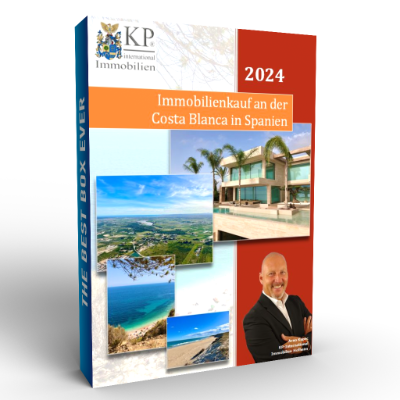
Buying property on the Costa Blanca

Our guide to buying on the Costa Blanca: the process, the official steps, the contract stages and the costs that come on top of the purchase price. No detours, straightforward.

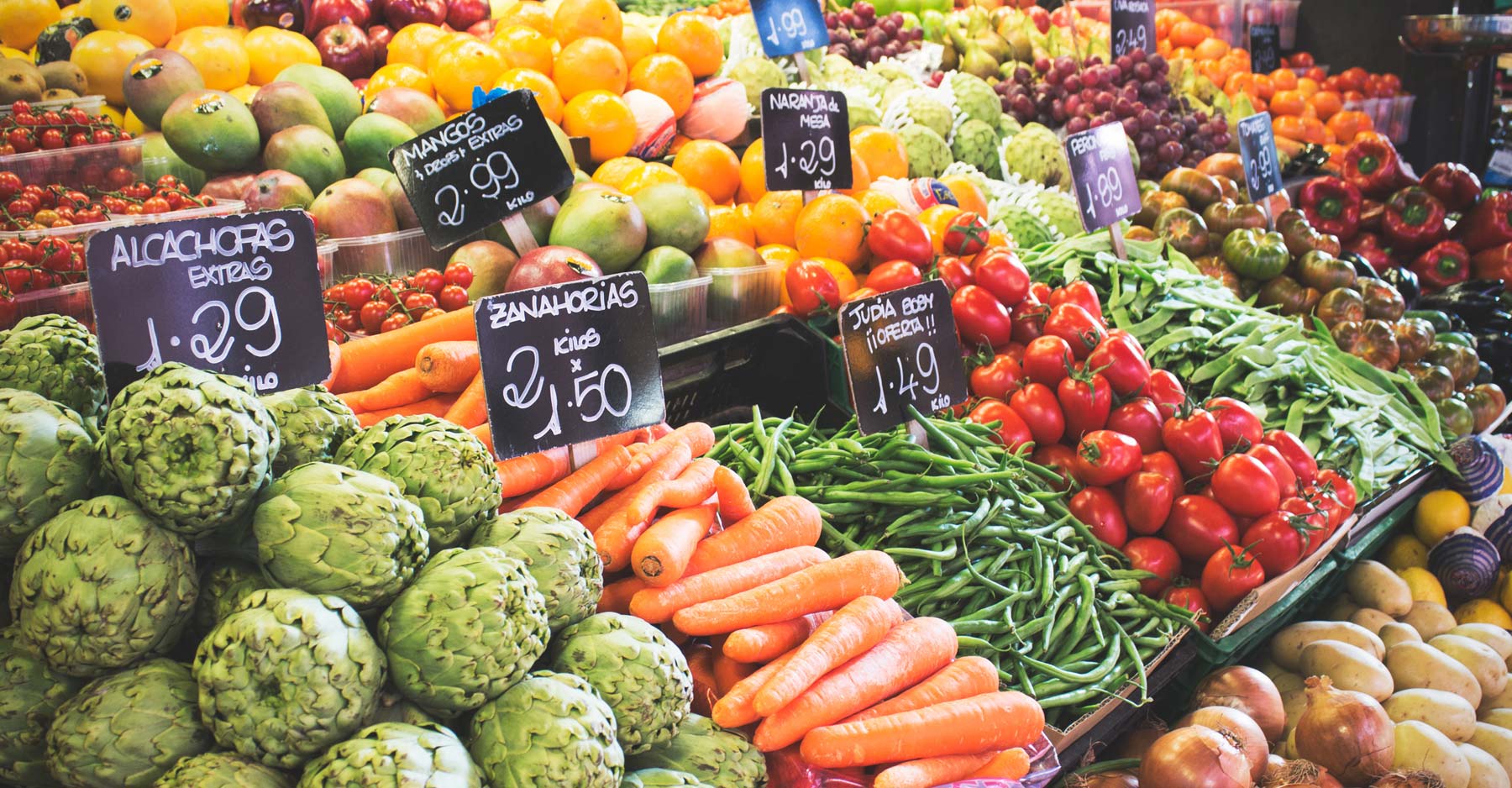
A weekly market on the Costa Blanca — citrus, vegetables and nuts from the surrounding countryside
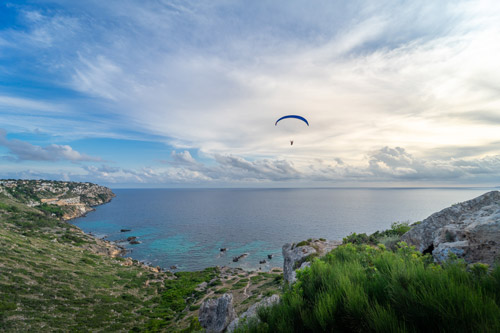
Paragliding above the coast. The choice runs from the golf course to the tandem flight.

The weekly markets

Almost every town in the region holds a market once a week. Farmers from the surrounding countryside bring sun-ripened fruit, along with citrus, vegetables and every kind of nut — in wide choice and at very low prices.

  • Monday — Dénia, Elche, Santa Pola, San Pedro del Pinatar
  • Tuesday — Altea, Benijófar, Los Alcázares, Orihuela
  • Wednesday — Benidorm, Cartagena, Guardamar, La Mata, Ondara, San Miguel de Salinas
  • Thursday — Alicante, Gran Alacant, Jávea, Lo Pagán, Rojales, San Fulgencio
  • Friday — Crevillente, Dénia, Moraira, Orihuela, Torrevieja, Pilar de la Horadada
  • Saturday — Alicante, Almoradí, Gandía, Mazarrón, Orihuela Costa, Santa Pola, Torre Pacheco
  • Sunday — Benidorm, Los Montesinos, Puerto de Mazarrón, San Fulgencio

Fish and seafood

The region is known for the richness of its waters. From Dénia through Alicante and the Mar Menor to the bay of Mazarrón: seafood, prawns, scampi, squid, grouper, hake, sole and tuna — landed fresh and sold in the market halls and the better supermarkets.

Puerto de Mazarrón sits particularly well, grown from a fishing village and known to this day for its large fleet.

The next step

What is your property worth today?

A sound valuation is the beginning of every good decision — whether you sell this year or in five years' time.